The $100 Lamp that took years to buy
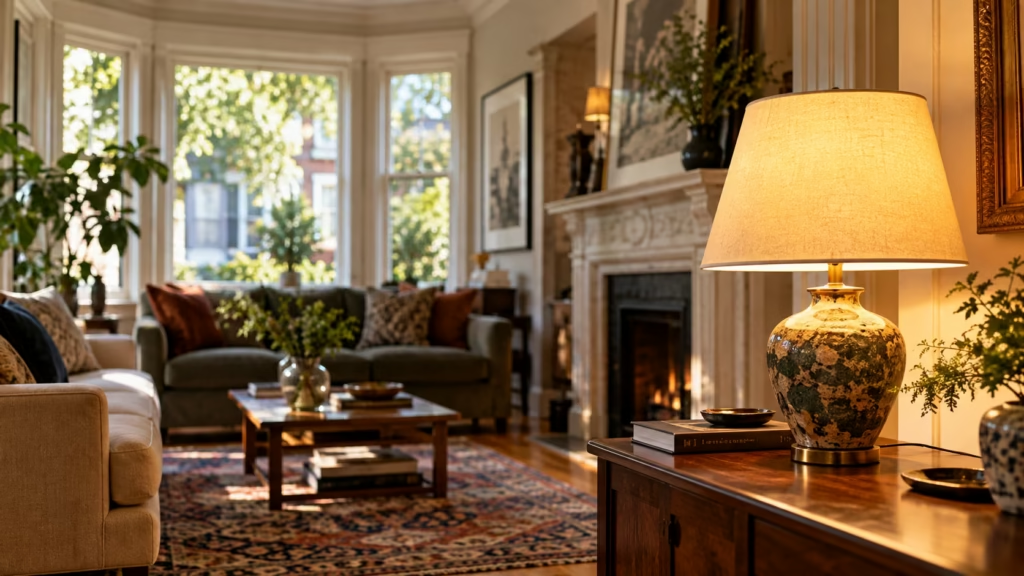
Does Your Product Make Sense Here? We live in a San Francisco house built in 1914. It has wonderful old moldings, curved bay windows, old-growth redwood framing, and the kind of detail that reminds you people once took an unreasonable amount of pride in making a wall look good. Our living room reflects roughly 112 years of people making decorating decisions. Two couches face each other around the fireplace. A flat-screen TV sits on a cabinet chosen to feel appropriate to the room. There is an Indian wool rug. My mother’s antique lamp. Old things. New things. Different periods, different styles—an eclectic mix that somehow works together. For years, my wife and I wanted to replace that lamp. This should not have been difficult. We were not shopping for a Tiffany lamp that required a second mortgage. We were not looking for some designer object with a name important enough to justify four zeros after the dollar sign. We just wanted a nice lamp. The Problem Wasn’t Finding a Lamp My wife would lean modern. I would argue that the house wanted something more historic. Then she would find something retro that I liked, while I would suddenly decide the room needed something contemporary. We could agree that hundreds of lamps were attractive. We could not agree that one belonged there. That was the real decision. The lamp was never being evaluated by itself. It had to sit beside the old fireplace, across from a modern television, above an Indian rug, inside a 1914 room with curved windows and a collection that already had its own balance. The wrong lamp would not merely look wrong. It could make everything around it look a little wrong, too. Then We Found the One One day, we found a lamp on eBay. It was difficult to classify. Not exactly antique. Not contemporary. Not obviously retro. Fun. Different. Maybe a little strange. And somehow, both of us looked at it and thought: That works. It didn’t win because it was objectively the most beautiful lamp we had seen. It won because it made sense in the context. The Same Problem Exists in Business A business can face the same problem. Aesop, the skin-care company, is known for designing stores around the architecture and character already surrounding them instead of dropping the same box everywhere. Its Park Slope store, for example, drew from the neighborhood’s brownstones and brickwork. The question is not simply: Is this a beautiful store? It is: Does this store make sense here? That distinction matters. Customers Don’t Decide in a Vacuum This is also a useful question when customers are not choosing you. Your product may be good. Your price may be fair. Your story may even be clear. But does the choice fit the world they are already living in? People rarely decide against a blank white background. They decide inside a world that already has: History Taste Expectations Other products Other people Habits Memories Your product enters that world. And when someone evaluates it, they are not only asking: “Do I like this?” They are also asking, often unconsciously: “Does this belong here?” The Better Question Sometimes the problem is not: Do they like us? It is: Do we make sense here? Our $100 lamp finally did. And maybe that’s the lesson. The strongest choice isn’t always the most beautiful, the newest, or the most impressive one. Sometimes it’s the one that fits the world that already exists. Source note: Aesop — Our Story / approach to store design